
When you’re trying to boost your chances of conception, timing is everything. But how do you know when the time is right?
Chances are, you’re already familiar with the fertile window – the few days each month when you’re able to conceive. For most people, this is the five days leading up to ovulation, the day of ovulation and the day after ovulation (about seven days in total). Sperm can wait in the fallopian tubes for the newly released egg for a couple of days. This means that the 2-5 days preceding ovulation are the most important of all.
So, how can you find your monthly fertility window? It’s not simply a matter of scheduling date night for Day 14 of your menstrual cycle. The calendar method doesn’t work for everyone, particularly if you have irregular periods or your cycle length varies monthly.
Instead, here are the four methods I recommend to help you figure out when to have sex.
1. Invest in an Ovulation Predictor Kit
Most of my patients, when they initially come to see me, are using Ovulation Predictor Kits. OPKs can detect a surge in the production of luteinizing hormone (LH), which occurs roughly 36 hours before ovulation. By timing intercourse for shortly after the LH surge, you can increase your odds of conceiving.
But, although useful, OPKs can’t be used in isolation. This is because they don’t actually test for ovulation occurrence. They simply track the rise in the luteinising hormone that can predict it. As a result, there are a number of reasons why they might not be accurate:
Occasionally, an egg fails to emerge from its follicle after the LH surge has occurred. This is a condition known as LUFS (luteinized unruptured follicle syndrome). So even though there is a peak in LH, no egg has been released.
Additionally, these tests do not work consistently on women over 40, especially in perimenopause. These woman have an increased levels of LH in their systems, rendering the tests invalid.
OPKs aren’t reliable in women with PCOS, especially if it is undiagnosed. PCOS sufferers tend to have a high baseline level of LH, and this makes it difficult to detect the LH surge that indicates ovulation.
Because the peak time of luteinizing hormone is short, you can easily miss it and get a negative test result. That’s why it’s important to do tests twice a day.
In some cycles, ovulation does not occur because of stress, intense physical activity, sudden weight changes, or unusual climate.
2. Chart Your Basal Body Temperature
I always recommend that my patients get to know their menstrual cycle by charting their basal body temperature (BBT).
When you ovulate, your temperature increases by around 0.2C. In the follicular phase (before ovulation), oestrogen is dominant and has a suppressant effect, maintaining body temperature at a lower level. The first high temperature occurs a day or two after ovulation, as the corpus luteum releases progesterone.
So by tracking your BBT over a few months, you’ll gain a better understanding of your menstrual cycle and fertile window.
Here’s how to do it:
Take your BBT orally with a digital thermometer, and record it every morning through your menstrual cycle.
It’s important to take your temperature at rest, so take it immediately on waking, before you get out of bed.
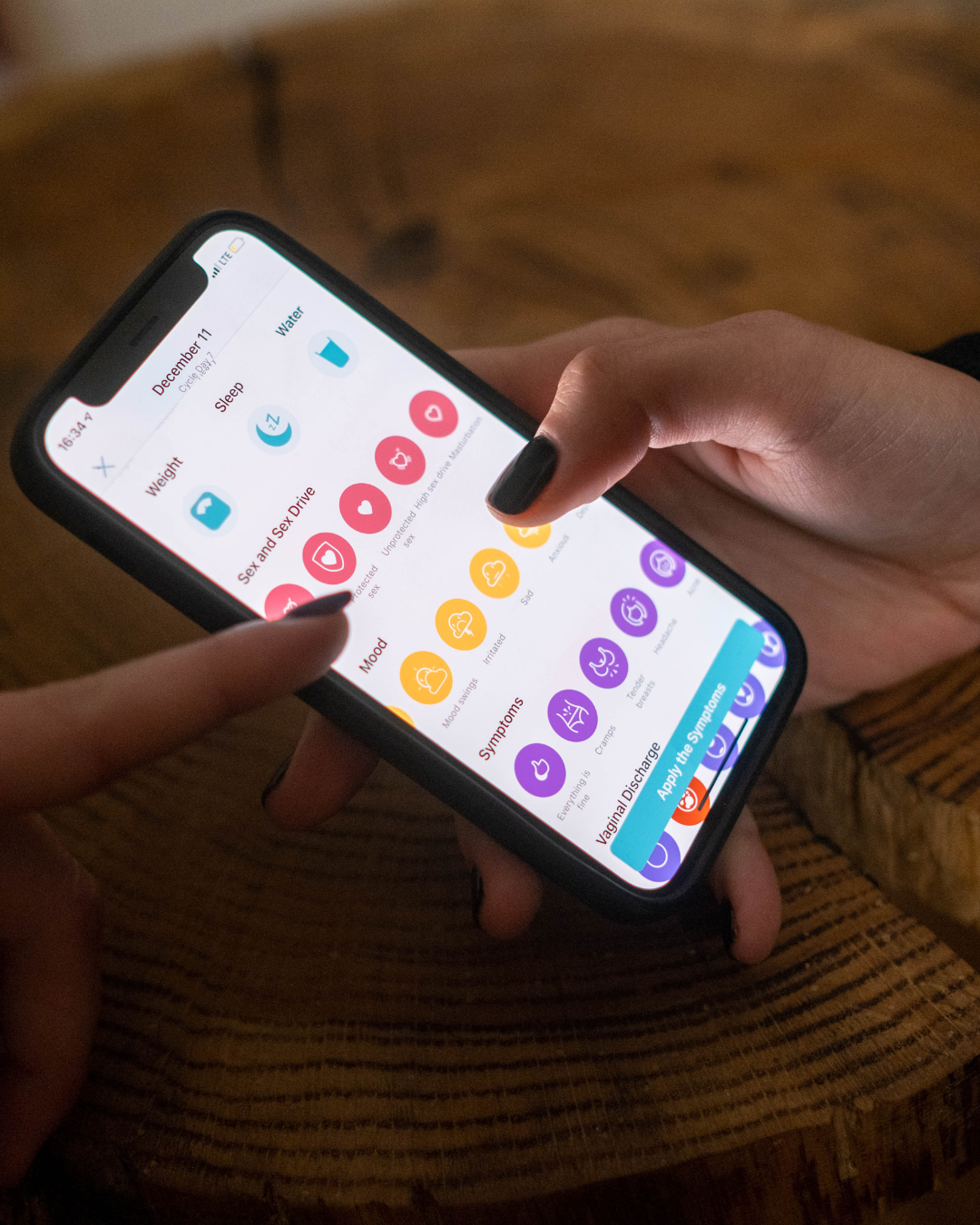
When the slightly higher temperature remains steady for 3 days or more, this means that ovulation has likely occurred. You can then record the dates on an app or a chart.
You can also find more sophisticated kits that monitor fertility through a sensor inserted into the vagina at night, with readings sent to an app.
3. Look at Your Cervical Mucus
Your BBT will tell you if and when you ovulated after it happened. But to maximise your chances of getting pregnant, you need to have sex before ovulation. That’s where cervical mucus comes in to identify ovulation.
By tracking the changes in consistency, you’ll be able to identify when you’re about to ovulate. This change is brought about by stringy molecules called mucins, which respond to increasing oestrodiol levels.
Your mucus tells you where you are at each stage in your cycle:
Dry (infertile): Post period, your vulva area feels dry and you may not even be aware of the mucus, which is thick, pasty and impenetrable to sperm.
Sticky (possibly fertile): As oestrogen levels rise during the follicular phase, the mucus becomes more liquid and wet, even sticky. Its role is to catch the abnormal/poor quality sperm (i.e. slow swimmers) before they reach the uterus.
Creamy (fertile): Just before ovulation, mucus becomes more stretchy and fertile. This provides a rapid transportation of the sperm to the uterus. To facilitate this, the mucins are lined up longitudinally and appear as pine needles under a microscope. This ‘Spinn’ mucus is very slippery (a bit like egg white). It stretches like a web if placed between the index and thumb.
Clear (highly fertile): Finally the mucus makes another change. It is not as thick and stretchy as Spinn but it is extremely lubricative and feels slippery in the vulva. This is the most fertile mucus of all, giving the sperm a final push to pass through the cervix into the uterus.

Graphic taken from https://daysy.co.uk/
4. Track Your Cervical Position
You probably know the cervix sits at the top of your vagina. I think of it as a sort of drawbridge to the uterus – sometimes it lets stuff in, sometimes it doesn’t. Getting in touch, literally, with your cervix and observing the changes in shape and position can provide ovulation information. Teamed up with the BBT chart and cervical mucus tracking, your knowledge gets even better.
Here’s how to track where you are in your cycle by feeling your cervix:
Most of the month you should be able to feel your cervix by inserting your finger into your vagina. It feels like a firm, round dimple and if you are not close to ovulation it is easy to find.
However, nearer to ovulation, the shape, position and texture of the cervix changes. This is because as oestrogen increases, the ligaments supporting the uterus become tighter pulling the cervix higher up the vagina. It is then a little bit more difficult to feel and some women need to squat to reach it.
Around ovulation, the cervix now feels softer in texture. As the cervical mucus is released, the small opening in the centre of the cervix begins to open. This can be felt when palpating the cervix.
The fertile window starts at the first signs of the cervix moving higher, becoming softer and shorter in length. Once the progesterone kicks in post ovulation, the cervix moves back to its low, firm, closed position and the fertile window is now closed.
Putting It All Together
As we’ve seen, ovulation happens when the cervical mucus is stretchy, your BBT rises, the cervix becomes higher in the vagina, and LH is released. The days immediately leading up to this are the optimal time for you to have sex.
Journaling these findings will help you discover your fertility window. Many people also find that tracking the changes in their body helps to give them back a feeling of control.
Finally, remember that sex isn’t just for those five days a month. If you can, after the fertile days are over, try and enjoy sex for its own sake and forget trying to get pregnant until your next fertility window.