

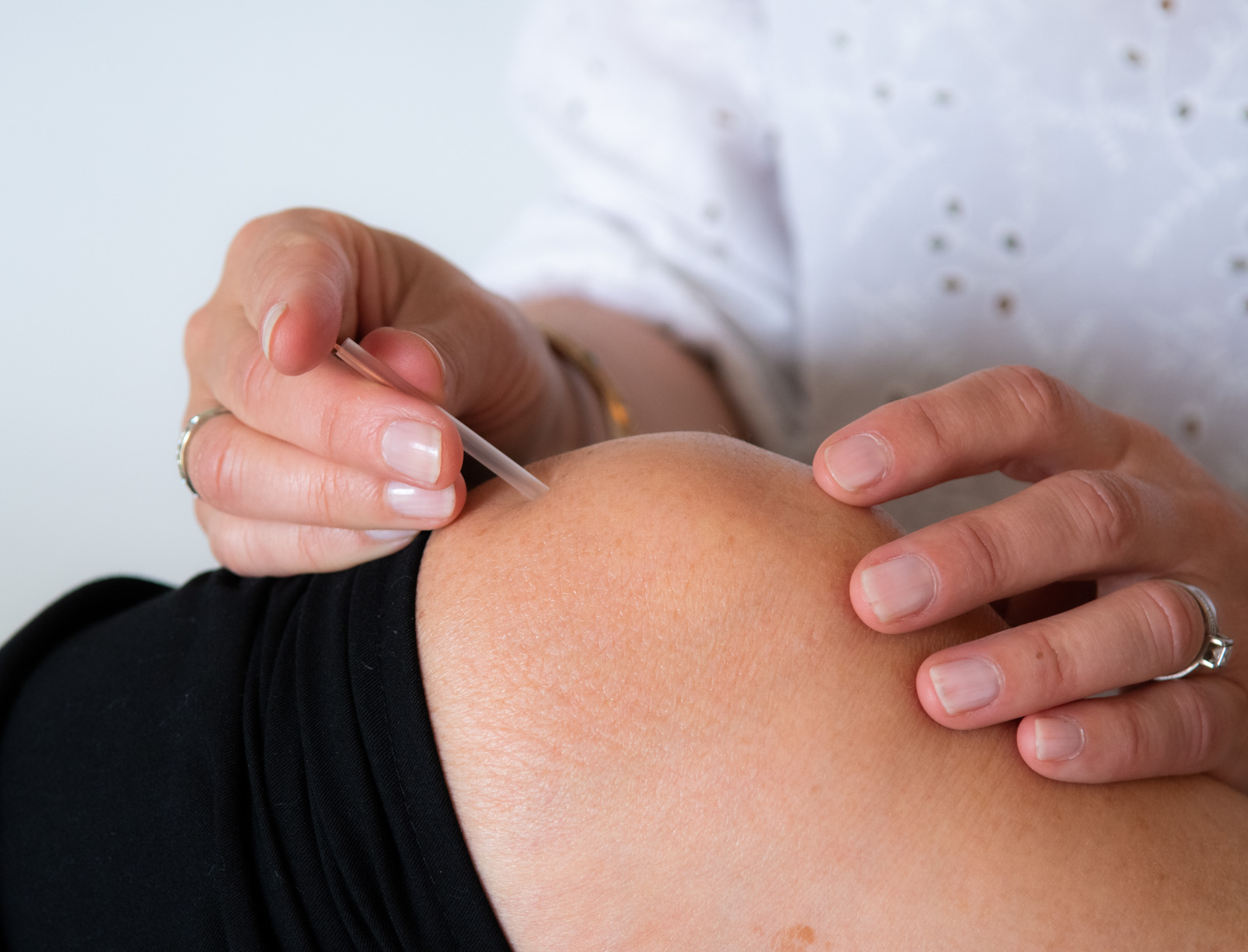
Every acupuncture session is completely individual — and patients often want to understand how I choose points, why treatment sometimes happens far away from the painful area, and what to expect in terms of results.
Here are the questions I hear most often, answered simply and honestly:
How do you decide which acupuncture points to use?
Choosing points is like creating a personalised map for your body that day.
I decide on points based on:
- Your Main Concern – Whether it’s pain, hormones, digestion, sleep, stress, or anything else, I select points that influence the systems involved.
- Your Pulse and Tongue – These help me understand what’s happening internally — is there stagnation, deficiency, heat, cold, or stress affecting the system?
- Your Presentation Today – Your body changes from week to week. One session may focus on releasing tension, another on boosting energy, another on regulating hormones. I adjust the treatment to what your body needs right now.
- Point Combinations – Some points work best in pairs or groups. Certain combinations enhance circulation, others calm the nervous system, others regulate the uterus, digestive system, or immune function.
So even if two patients have the same condition, their point prescriptions may be completely different.
Do you use different points at different times of my period?
Yes — especially in treatments for hormones, menstrual health, fertility, or regulating the cycle.
Your menstrual cycle has phases, and acupuncture supports each phase differently:
- Menstruation (when bleeding): I focus on moving blood, reducing cramps, easing clots, and relieving pain.
- After the period: This is the “building” phase, so I use points that nourish blood, support energy, and help the uterus recover.
- Ovulation: Points shift to improving blood flow to the pelvis, supporting egg development, balancing hormones, and calming stress.
- Premenstrual phase: This is where mood, bloating, breast tenderness, and sleep issues can show up. I use points to move Qi, reduce tension, and prevent symptoms before they begin.
Hormonal acupuncture is dynamic — the points change as your cycle changes.
Why do you use points on other parts of my body when the pain is in my arm (or head, back, etc.)?
This is one of the most interesting things about acupuncture.
Meridians Connect the Whole Body – In TCM, pain anywhere along a meridian can be treated by working on a distant part of the same pathway.
For example:
- Headaches can be treated by points on the feet.
- Arm pain can be treated by points on the opposite leg.
- Back pain can improve from points on the hands.
Distal Points Calm the Nervous System – Points away from the painful area often relax the whole body more effectively and allow local tension to release naturally.
Local Areas May Be Irritated – If something is inflamed or extremely tender, using distal points allows me to treat the cause without irritating the area further.
Patients are often amazed at how a tiny point far from the problem can relieve the pain almost instantly.
How many sessions will I need for my condition?
This depends on:
- How long you’ve had the condition
- The severity of symptoms
- Your overall health, stress, sleep, lifestyle, and cycle
- Whether it’s acute (new) or chronic (long-standing)
General Guide:
- Acute issues: often need 1–4 sessions
- Chronic issues: often need 6–12 sessions
- Hormonal or menstrual regulation: typically a minimum of 3 cycles
- Fertility or IVF support: weekly sessions through each stage
- Stress, sleep, anxiety: many patients feel better quickly but benefit from ongoing maintenance
During your first appointment, I give you a personalised treatment plan so you know exactly what to expect.
How long will it take for me to feel better? Will it be immediate?
Some people feel relief during the session or shortly after. Others notice changes gradually over several treatments.
Here’s what influences the timing:
Acute vs. Chronic
- Acute pain often responds very quickly — sometimes immediately.
- Chronic conditions (months or years old) take more time because the body needs to unwind old patterns.
Sensitivity to Treatment – Some people respond quickly; others respond more gradually. Both are normal.
Severity of Imbalance – If your body is depleted, inflamed, or under long-term stress, improvement may be more steady than sudden.
Internal Systems – Hormones, digestion, sleep, and mood often improve in layers.
Most patients feel a shift within 1–3 treatments, whether that’s reduced pain, better mood, improved sleep, or feeling calmer and more balanced.
Even when results aren’t immediate, acupuncture is creating changes beneath the surface — improving circulation, calming the nervous system, and regulating hormones.
Final Thoughts
Acupuncture is not a one-size-fits-all therapy. It’s responsive, adaptable, and tailored to your body at every session. Your questions are always welcome — they help me choose the best treatment for you. Why not book an appointment to find experience the wonders of acupuncture.